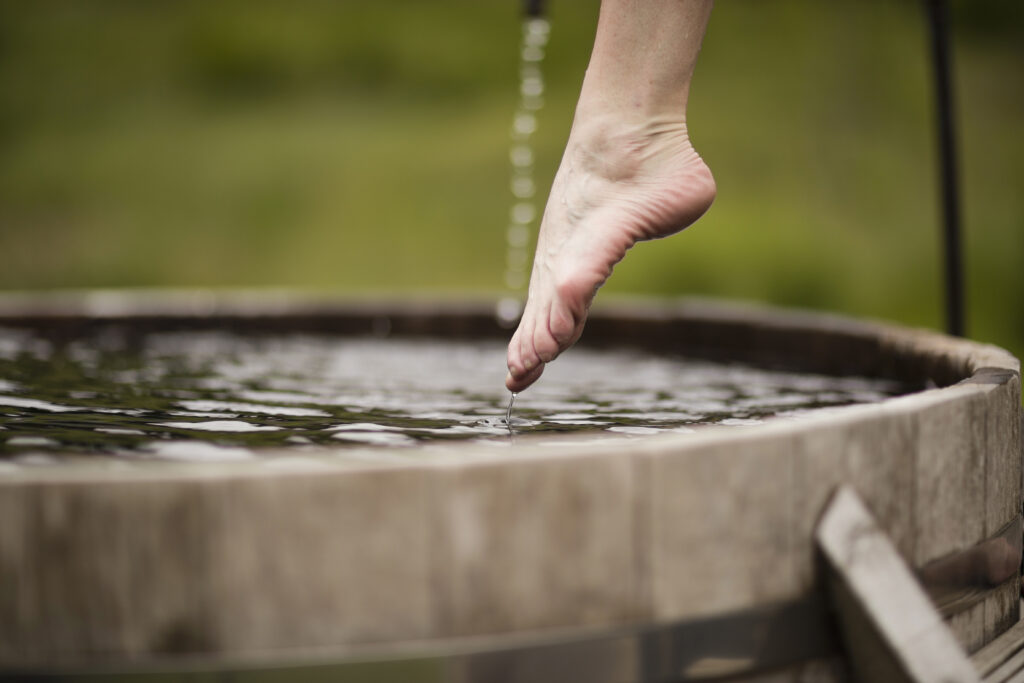
Let’s talk about cold plunging. Aka: voluntarily submerging your body into freezing water like a human popsicle because healing and endorphins, and Wim Hof said so.
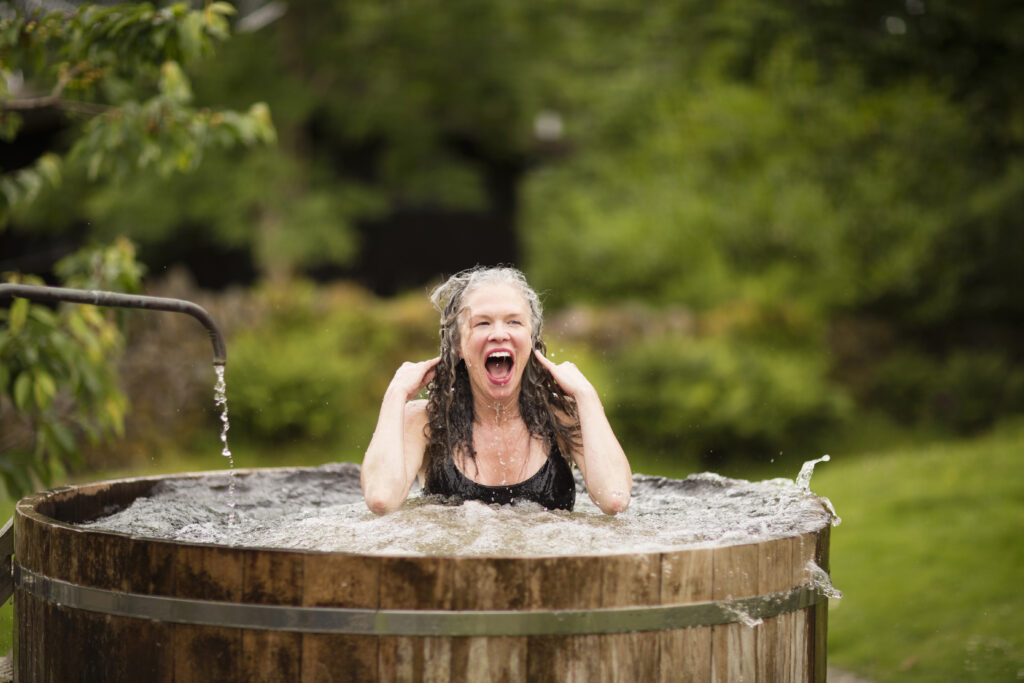
Here’s a lot that isn’t being discussed. So grab something warm to drink (ironic, I know) and let’s talk about what women need to know about cold plunging.
Cold plunging has officially gone mainstream, but here’s the kicker: almost everything you’re seeing about it is through a distinctly male lens. Your friend’s boyfriend swears it changed his life. Celebs are doing it. Your gym is selling “plunge packs.” And if you haven’t heard someone say “It’s all mental, bro”.
But here’s the plot twist no one’s screaming from the ice bath rooftops: Cold plunging hits different for women. And not always in a good way.
Yeah! There’s a gap. A big, frosty, not-so-fun truth that most of the fitness-biohacking-ice-bucket crowd is completely ignoring: Our bodies aren’t built the same. And what helps your boyfriend recover faster might be messing with your hormones.
Let’s unpack the myths, the missteps, and what Dr. Stacy Sims (aka the Beyoncé of female exercise science) has to say about it.
What the Hell Is Cold Plunging Supposed to Do?
Here’s the promise:
- Reduces inflammation
- Boosts mood & energy
- Speeds up muscle recovery
- Enhances focus
- Increase circulation and can give skin a healthy glow.
- Makes you feel like a warrior Viking who drinks mushroom coffee
And listen to those benefits? Real. For some people. Especially for dudes with high testosterone and naturally low body fat who are trying to build muscle mass and recover fast. But just because it’s good doesn’t mean it’s good for everyone in the same way.
And that’s where things get chilly.
Cold Plunging & Women: Let’s Talk Hormones, Baby
We have hormonal fluctuations. Menstrual cycles. More brown fat (which is good). A totally different stress response system. Yet almost every single study done on cold plunging has been on men.
That’s right. The data everyone’s quoting? It’s based on male physiology. So, when your cold plunge-loving boyfriend tells you, “It’s totally safe, just do it,” what he really means is: “It worked for me, so obviously your uterus agrees.”
Spoiler: It might not.
If you haven’t heard of Dr. Stacy Sims yet, let me introduce you to your new favorite scientist. Her mantra “women are not small men” has revolutionized how we think about female physiology in sports and wellness.
According to Dr. Sims, women’s bodies respond differently to various stressors, including cold exposure, thanks to our hormonal makeup. Our higher body fat percentage, different fat distribution, and hormonal fluctuations throughout the month mean that cold affects us differently, both in how we experience it and the benefits we get from it.
“Women generally have more subcutaneous fat than men,” Dr. Sims explains. “This insulation layer means we don’t get as cold as quickly, but it also means it takes longer for the cold to trigger some of the beneficial physiological responses.”
In other words? That 3-minute protocol your boyfriend is following might need to be 4-5 minutes for you to get similar benefits. But, this is crucial, that doesn’t mean you should just stay in longer without proper adaptation.
Here is the thing from the hormonal perspectives, during the follicular phase (from the first day of your period until ovulation), your body temperature is naturally lower, and you’ll likely tolerate cold better. Some research suggests this might be the optimal time for women to engage in cold exposure if they’re looking for performance benefits.
But during the luteal phase (between ovulation and your period), body temperature rises, making cold exposure feel more shocking and potentially more stressful on your system. Many women report feeling miserable in cold water during this phase—and not in the good, hormetic stress kind of way.
But how Women’s Bodies React Differently to Cold? Studies show women generally feel cold more intensely than men do. This isn’t being “dramatic”—it’s legitimate differences in thermoreceptors and blood vessel responses. The same water temperature will genuinely feel colder to most women.
That said, let’s get to the biggest mistake women are making with cold plunges:
Mistake #1: Copy-pasting protocols made for men.
According to Dr. Sims, women who cold plunge immediately after strength training might be blunting the muscle gains they just worked for. That’s right: hopping in an ice bath right after lifting weights could actually cancel out your hard work.
For women, recovery doesn’t mean freezing your gains. It means respecting your cycle, your hormone phases, and your stress levels, which are already different than men’s.
Because let’s be honest: we’re already multitasking stress like pros. We’re juggling work, relationships, kids, pets, group chats, the emotional weight of the entire planet… Do we really need to throw a full-body stressor like ice water on top of that?
Mistake #2: Ignoring Your Cycle (Yes, That Thing You Want to Pretend Doesn’t Matter)
Let’s break it down.
In the first half of your cycle (follicular phase, right after your period), estrogen is rising, energy is higher, and you’re better equipped to handle stress.
This is the phase where cold plunging might actually feel energizing and beneficial. But…
In the second half (luteal phase, right before your period), progesterone rises. Your core temperature goes up. You become more sensitive to stress. Cortisol spikes more easily.
Cold plunging here? It might feel like a disaster. You could feel extra anxious, get chills for hours, or have trouble sleeping.
And if you’ve ever climbed out of a cold plunge feeling like a sad, shivering potato instead of an empowered ice queen, your hormones may be to blame.
Don’t ignore your cycle. Cold plunging might work sometimes… and completely backfire other times.
Mistake #3: Overusing It as a Stress Tool
Here’s the irony: cold plunging is a stressor. It’s supposed to be.
The idea is that it creates a short-term spike in stress (cold shock), and then your body adapts and comes out stronger, calmer, and more resilient.
But if you’re already burnt out, anxious, or your nervous system is holding on by a thread… adding a jolt of ice may not be the move.
This is especially true for women juggling adrenal fatigue, perimenopause, or post-COVID nervous system dysregulation. Cold plunging can actually make your anxiety worse if your body’s already in survival mode.
Mistake #4: Expecting It to Fix Your Life
Is cold plunging magical? Maybe.
But will it fix your sleep, anxiety, libido, motivation, hormones, and relationship with your ex?
No. It’s just cold water.
A lot of women start cold plunging, hoping it’ll be their all-in-one life optimizer. And hey, it might help. Temporarily.
But if you’re using it to:
- Numb your emotions
- Avoid real rest
- Hack your way out of burnout…
Then girl, we need to talk.
Because that’s not wellness — that’s ice-flavored avoidance.

Now that we’ve debunked the BS, let’s talk about how to actually use cold plunging smartly, like the goddess biohacker you are.
✅ 1. Pick the Right Time
Cold plunge in the morning, not after strength workouts — especially if you’re training for muscle growth. If you do high-intensity training, give your muscles some time to do their thing before freezing them.
✅ 2. Tune Into Your Cycle
- Follicular phase (Day 1–14): Great time to try plunges. You’re more resilient, less sensitive to stress.
- Luteal phase (Day 15–28): Be gentle. If you plunge, reduce the time or temp, or skip it altogether.
✅ 3. Start Slow, Don’t Go Full Viking
You don’t need to dive into a 32°F ice bath and suffer. Even a 2-minute 55°F plunge can offer benefits. More suffering doesn’t mean more healing. If your teeth are chattering for an hour afterward, that’s a sign. Not a badge of honor.
✅ 4. Try Contrast Therapy
Don’t want to commit to a cold-only dip? Contrast therapy (alternating hot and cold) can still be great for circulation and mood without wrecking your system.
Think: sauna then cold rinse. Hot bath + cold shower. Or even just splashing cold water on your face. (Yes, that counts.)
✅ 5. Listen to Your Body — Not TikTok
If cold plunging feels like torture and you dread it every time? Don’t do it. You’re not weak. You’re not missing out. You’re being smart. Wellness should feel good. If it feels like punishment, it’s not self-care. It’s performative suffering.
Cold plunging can offer amazing benefits for women—from recovery to stress reduction to potentially helping with hormonal symptoms. But the path to those benefits looks different in female bodies.
The key is personalization, patience, and listening to your body rather than following generic protocols. Your cold plunge practice should evolve with your cycle, your life stage, and your individual physiology.